
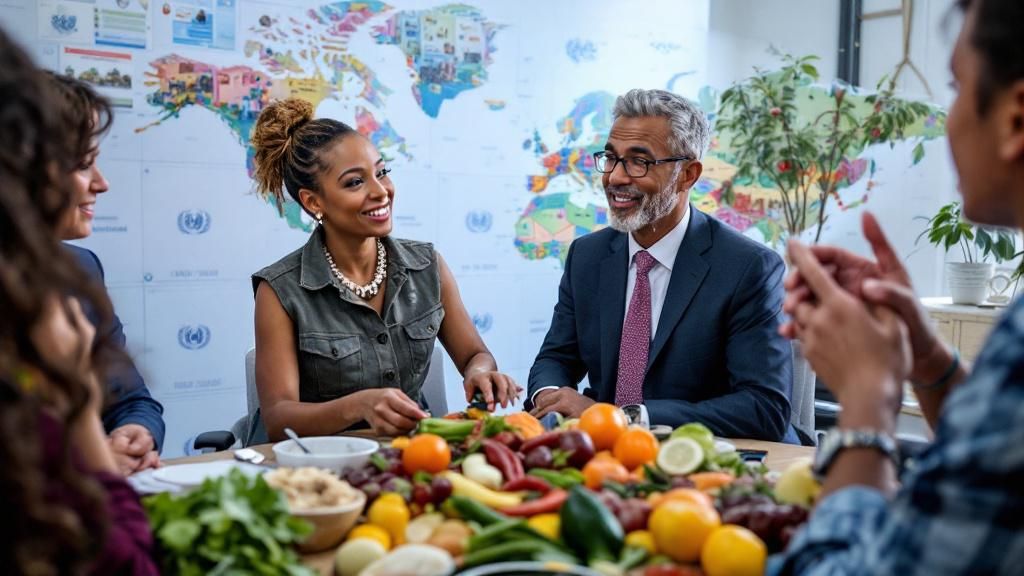
The United Nations has unveiled an ambitious new initiative designed to combat the persistent global challenges of poverty and hunger that continue to afflict millions worldwide. This comprehensive programme marks a significant milestone in international development, combining creative solutions, substantial financial commitments, and collaborative efforts from participating nations to create lasting change. The initiative addresses root causes whilst delivering short-term support, committed to redefining how the international society engages with these interconnected problems. Explore how this pioneering method intends to reshape lives and build a more equitable future.
Global Response to Poverty Crisis
The United Nations’ latest initiative constitutes a watershed moment in the worldwide fight against poverty and hunger. By mobilising resources across several continents and engaging both developed and developing nations, the UN aims to create a unified approach that transcends conventional limits. This collaborative approach acknowledges that poverty and hunger are linked problems requiring coordinated effort. The programme unites governments, non-governmental organisations, and commercial partners to ensure comprehensive coverage and sustainable outcomes across vulnerable regions.
Member states have made a commitment to unprecedented levels of collaborative work, committing financial support and specialist knowledge to bolster existing programmes. The project stresses transparency and accountability, setting clear metrics to measure outcomes and effectiveness. By drawing on current systems and building upon proven regional approaches, the UN seeks to maximise efficiency and reduce overlap of efforts. This coordinated approach ensures that support goes to those with greatest need whilst developing robust frameworks capable of addressing future crises successfully.
Rapid Action Frameworks
The initiative’s opening phase focuses on urgent assistance and rapid intervention in areas facing critical food scarcity and severe deprivation. Emergency food supplies, healthcare support, and temporary shelter programmes are being distributed to vulnerable areas over the following weeks. The UN has set up rapid-response teams supplied with capability to evaluate local conditions and tailor interventions accordingly. These pressing actions aim to preserve life whilst sustained strategies are being implemented, confirming vulnerable populations get essential aid swiftly.
Financial funding channels have been optimised to expedite aid provision to frontline organisations active in affected areas. Local partners and community leaders are being given greater authority to identify urgent requirements and allocate funds effectively. Training schemes for distribution staff ensure that assistance gets to those it is meant to help whilst maintaining dignity and cultural sensitivity. These urgent steps serve as a bridge between emergency response and sustainable development, providing breathing space for communities to stabilise and begin recovery processes.
Long-Term Strategic Objectives
The programme establishes ambitious targets for poverty reduction and enhancing food security over the next decade. Strategic investments in agricultural systems, education, and medical infrastructure work to tackle root causes of poverty rather than merely treating surface-level issues. The UN has pledged to assist small-scale farmers through technology transfer and market linkage initiatives, allowing them to increase productivity in an environmentally responsible manner. These foundational investments build pathways for societies to achieve self-sufficiency and economic self-reliance whilst protecting the environment.
Long-term success requires organisational reinforcement and capacity building within government bodies and local organisations. The initiative prioritises skills development, administrative enhancements, and broader economic expansion to establish resilient economies equipped to endure emerging crises. By fostering entrepreneurship and promoting inclusive growth, the programme aims to create lasting job prospects. These targeted allocations represent a fundamental shift towards empowering communities to determine their own development trajectories, guaranteeing lasting transformation beyond the programme’s scheduled duration.
Deployment and Collaborative Framework
The UN’s scheme functions via a comprehensive delivery framework that involves governments, civil society groups, and commercial stakeholders. By establishing coordination offices throughout Africa, Asia, and Latin America, the initiative delivers culturally appropriate interventions that tackle regional needs. This distributed model enables quick response capabilities whilst ensuring oversight from UN headquarters. Partnerships with international development banks offer essential financial mechanisms, enabling long-term development programmes that provide work opportunities and improve food security structures throughout vulnerable regions.
Success is contingent upon authentic partnership between industrialised and emerging nations, with transparent accountability mechanisms securing resources get to intended beneficiaries. The framework incorporates capability enhancement schemes that reinforce local institutions and equip communities to become independent. Regular monitoring through impartial assessments and community feedback mechanisms preserves programme quality and effectiveness. By fostering long-term partnerships rather than temporary aid arrangements, the UN initiative seeks to create systemic change that breaks cycles of hardship and malnutrition, ultimately building robust communities capable of long-term growth.
